About All Tours Boat Cruise ToursResurrection Bay ToursWildlife ToursFrom Seward Tours Directions Hours & Fees
Find Tours 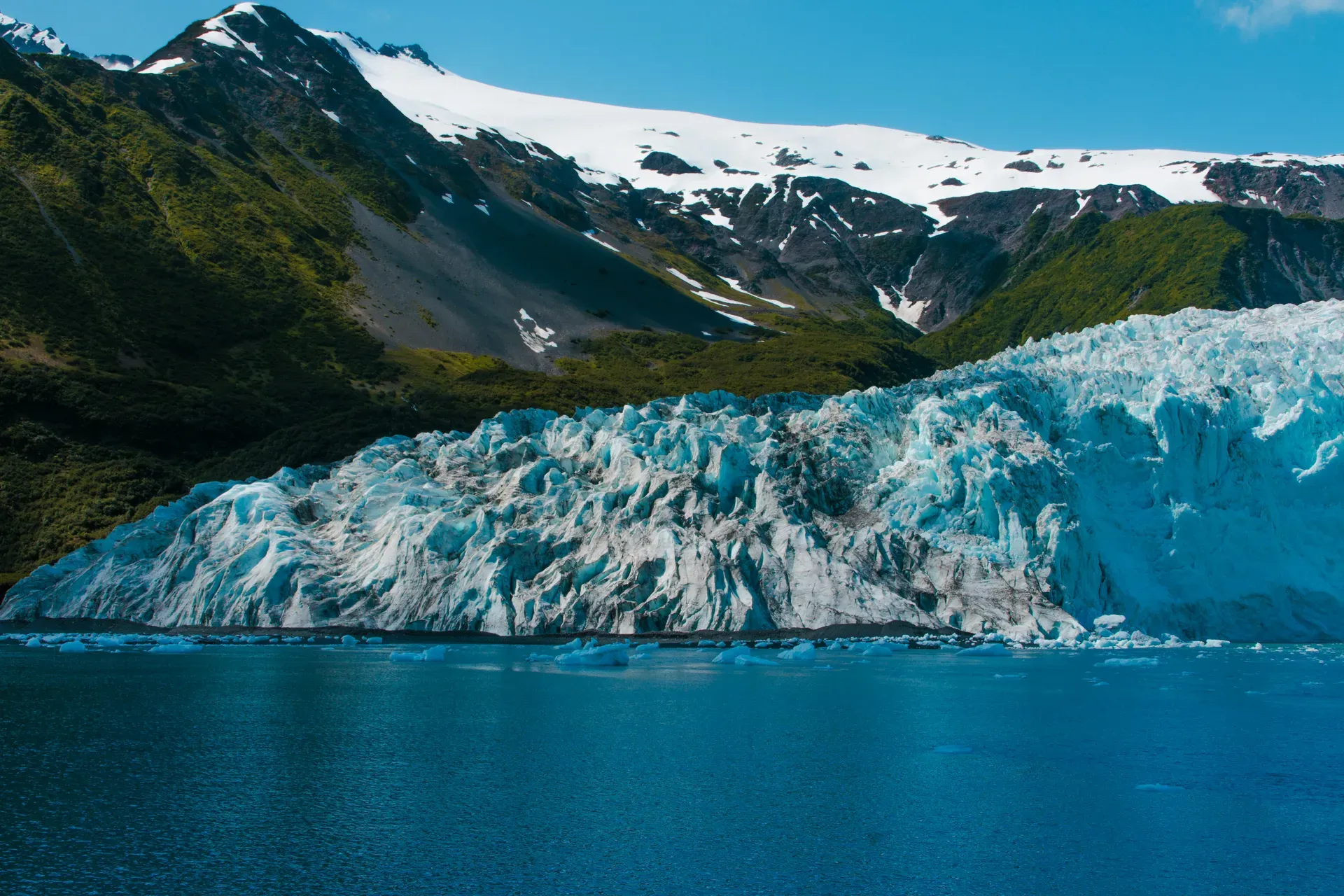
Kenai Fjords national park covers 607,000 acres of jagged coastline and glacial ice at the edge of the Kenai Peninsula in south-central Alaska. The 714-square-mile Harding Icefield dominates the landscape, feeding nearly forty glaciers that carve directly into the Gulf of Alaska.
Kenai Fjords National Park spans 607,000 acres where the Kenai Mountains drag directly into the Gulf of Alaska. The 714-square-mile Harding Icefield sits at the center of this landscape, burying the mountain peaks under ice up to a mile thick. Nearly forty glaciers flow outward from this central mass, grinding through rock before terminating in dense temperate rainforests or shattering into the ocean. Visitors arrive via the port town of Seward, traveling 126 miles south from Anchorage. The drive along the Seward Highway takes two and a half hours, while the Alaska Railroad's Coastal Classic Train covers the route in four hours during the summer months. Daily summer motorcoaches charge $60 to $80 for a one-way trip from Anchorage.
Access to the park is sharply divided. The Exit Glacier area provides the only road access, allowing visitors to walk within feet of an active valley glacier. Local shuttles like Adventure 60 North charge $20 to $32 for a round trip from downtown Seward to the trailhead. The Glacier View Trail offers a one-mile, wheelchair-accessible loop made of compressed gravel and pavement, leading to a panoramic view of the ice. The rest of the park requires a boat or floatplane to navigate the deep, steep-sided fjords.
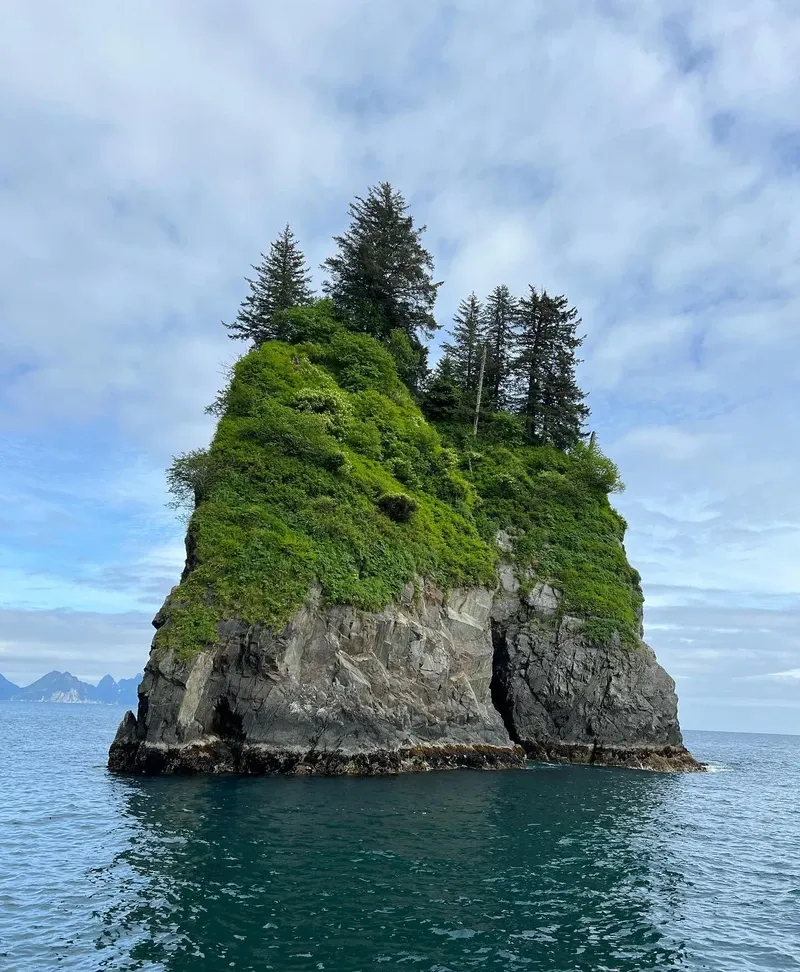
Marine currents collide with glacial outwash in these fjords, sustaining a dense concentration of wildlife. Humpback whales, sea otters, and harbor seals feed in the nutrient-dense waters of Resurrection Bay and Northwestern Fjord. Thousands of seabirds, including horned and tufted puffins, nest along the sheer rock cliffs of Fox Island. A typical visit ranges from a three-hour hike at Exit Glacier to an eight-hour coastal boat cruise deep into the fjords. The weather dictates every movement here. Heavy rain and high winds frequently cancel commercial boat tours, and cold coastal storms create a constant risk of hypothermia.
No entrance fees are charged at the park, and the 12-site tent campground at Exit Glacier operates on a free, first-come, first-served basis. Visitors can reserve coastal public-use cabins at Aialik and Holgate for $75 per night in the summer. The visitor centers open from Memorial Day weekend through Labor Day. The road to Exit Glacier closes to automobiles from late October to mid-May due to heavy snow, leaving the Willow Cabin accessible only via snowmachine or skis for $50 per night.
President Jimmy Carter established Kenai Fjords as a national monument on December 1, 1978, using the Antiquities Act to protect the Harding Icefield and surrounding coastal ecosystems. Congress officially designated the 607,000-acre area as a national park two years later on December 2, 1980, under the Alaska National Interest Lands Conservation Act (ANILCA). This legislation resolved decades of debate over land use in south-central Alaska, balancing conservation with state and native land claims. Prior to the park's creation, the 1971 Alaska Native Claims Settlement Act (ANCSA) permitted native corporations to select specific tracts of land within the proposed boundaries. The English Bay Corporation secured significant coastal acreage during this period. They eventually sold 32,000 acres back to the National Park Service, ensuring continuous federal protection of the fjord shorelines and critical marine habitats.
The dense Pacific Plate constantly slips under the North American Plate beneath the park, dragging the Kenai Mountains downward. This subduction zone triggers frequent earthquakes and actively reshapes the coastline. The magnitude 9.2 Great Alaska Earthquake of 1964 violently accelerated this process, dropping the park's shoreline by six feet in a matter of minutes. Drowned cirques and jagged islands now define the coastal profile, leaving only the highest mountain peaks exposed above the waterline. Glacial retreat continues to alter the map at a rapid pace. Exit Glacier has receded visibly over the last century, leaving behind a barren outwash plain of gravel and scoured rock. Numbered markers along the Glacier View Loop trail document the exact position of the ice edge in specific years, showing a retreat of over 100 feet annually in recent decades.
Early 20th-century prospectors scoured the Kenai Peninsula for gold, leaving behind scattered infrastructure long before the park existed. Abandoned mineral properties still exist in the remote coastal backcountry, hidden within the dense vegetation. These sites contain dangerous open mine shafts, decaying explosives, and toxic chemicals left exposed to the elements. Park rangers strictly prohibit entering or exploring any abandoned structures due to the high risk of collapse or chemical exposure. The National Park Service actively works to mitigate these hazards, but the remote nature of the fjords makes complete removal difficult. Stick to the maintained trails at Exit Glacier or the designated public use cabins to avoid these historic industrial hazards.
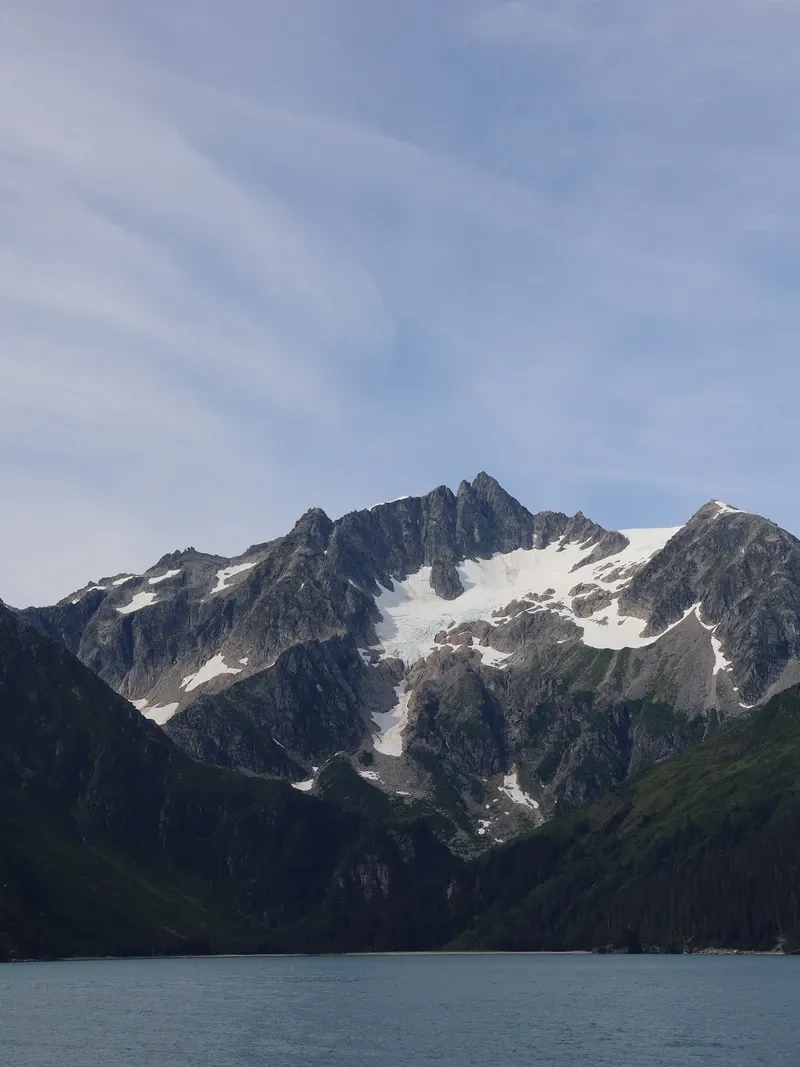
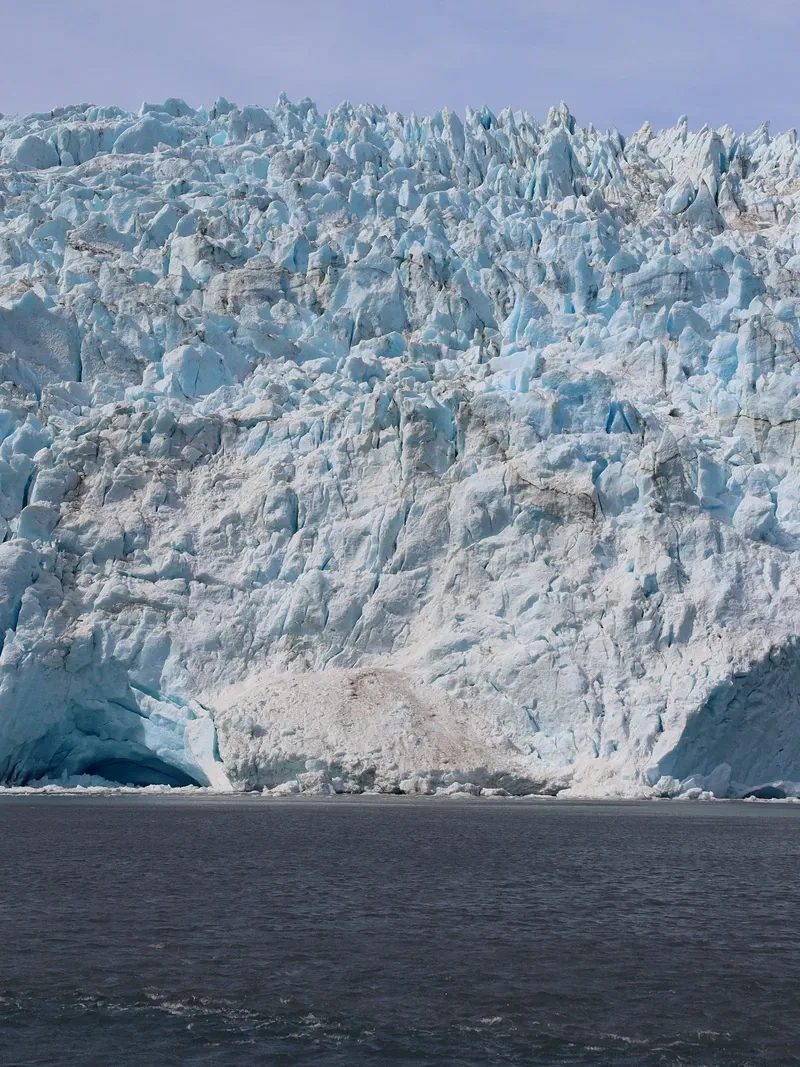
The Harding Icefield blankets 714 square miles of the Kenai Mountains, forming the largest icefield entirely within United States borders. This massive frozen dome reaches a thickness of one mile in its center, burying all but the highest jagged peaks, known as nunataks. Snow accumulates faster than it melts at these high elevations, compressing lower layers into dense, blue glacial ice. Gravity forces this ice outward, feeding nearly forty distinct glaciers that carve deep U-shaped valleys through the bedrock. Six of these are tidewater glaciers, meaning they flow all the way to the ocean and terminate in sheer ice walls that tower hundreds of feet above the water. Aialik Glacier, the largest tidewater glacier in the park, stretches a mile wide at its face and actively calves massive blocks of ice into the sea. Boaters must maintain a distance of at least one-quarter mile from these tidewater faces to avoid being capsized by sudden, massive waves generated by falling ice.
Bear Glacier represents the park's largest single glacier, extending 12 miles from the icefield to a long, narrow coastal lagoon. Instead of shattering directly into the ocean, Bear Glacier terminates in this protected body of water, filling the lagoon with slow-drifting icebergs the size of houses. Kayakers and paddleboarders navigate this calm lagoon, weaving between the floating ice chunks while avoiding the dangerous, shifting currents near the glacier's toe. Guided kayak tours also launch near Fox Island, where paddlers explore quiet coves and pristine beaches surrounded by turquoise waters. The physical landscape surrounding these glaciers consists of steep-sided fjords created by tectonic subsidence. The mountains are physically sinking into the Gulf of Alaska. This creates a harsh, vertical environment where dense Sitka spruce forests cling to thin soils on 45-degree slopes.
The Harding Icefield Trail offers the only foot access to the upper elevations of this frozen landscape. This strenuous 8.2-mile round-trip hike climbs 1,000 feet of elevation for every mile, starting in the dense valley forest before opening up at Marmot Meadows located 1.4 miles up the trail. Hikers who push past the tree line reach a panoramic viewpoint of the 700-square-mile ice sheet. Snow often persists on the upper sections of this trail well into mid-summer, creating a serious avalanche risk. Unpredictable glacier outburst floods frequently wash out the canyon below Exit Glacier. Hikers must stay on the marked trails and obey all orange safety flagging to avoid sudden surges of icy water and debris.
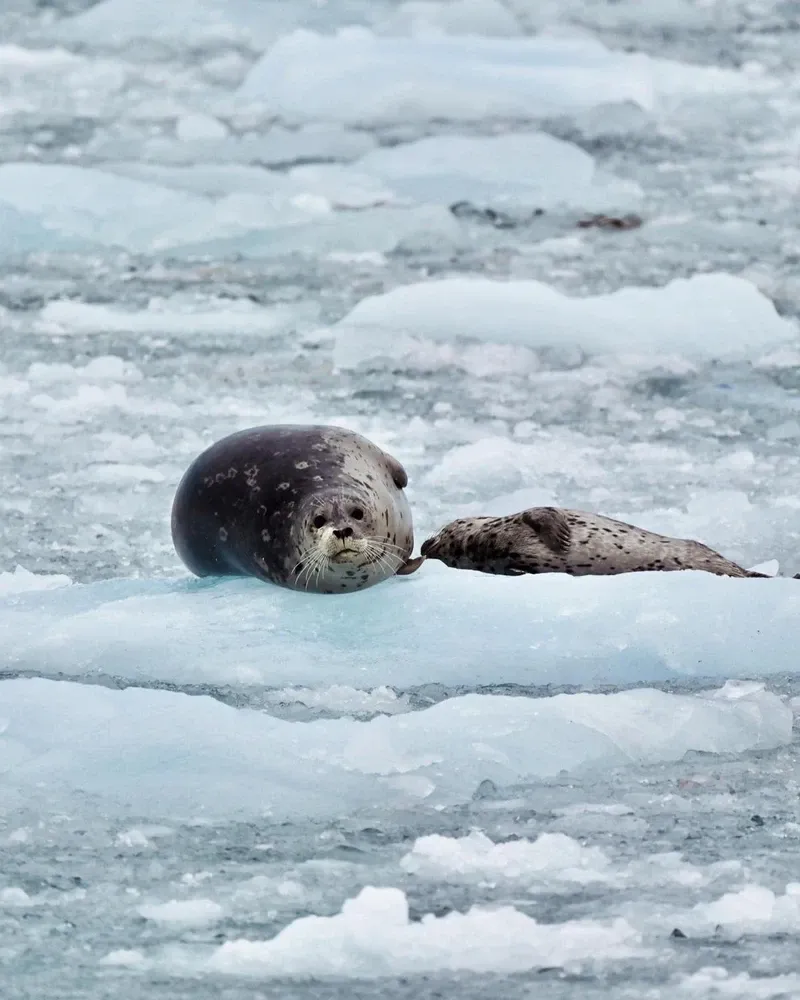
Alaska Natives, specifically the Sugpiaq (Alutiiq) people, have navigated the fjords and harvested resources from this coastline for thousands of years. The harsh terrain prevented the establishment of large permanent villages within the current park boundaries, but the protected coves served as vital seasonal hunting and fishing camps. Hunters pursued harbor seals, sea lions, and migrating whales in the nutrient-dense waters, relying on the marine ecosystem for food, clothing, and materials. The National Park Service currently manages more than 250,000 museum collection objects related to the region's human history. These artifacts document the specialized tools, waterproof garments woven from animal intestines, and skin-covered watercraft developed to survive the Gulf of Alaska's violent weather.
The park functions as a living laboratory for climate science and glacial geology. Researchers monitor the rapid retreat of Exit Glacier to measure the impacts of warming global temperatures on coastal icefields. The visual evidence of this retreat provides visitors with a stark, physical record of environmental change. Educational programs at the Exit Glacier Nature Center focus heavily on this shifting landscape, using historical photographs to demonstrate how much ice has vanished since the 1800s. Families participate in the Junior Ranger program here, completing activity booklets to earn badges while learning about glaciology and marine biology. Just outside the park boundaries in Seward, the Alaska SeaLife Center rehabilitates injured marine mammals and diving seabirds, continuing the region's focus on coastal conservation.
Federal law protects the area's natural state, enforcing strict regulations to maintain the wilderness character and protect the native wildlife. Marijuana possession remains a federal crime inside the park boundaries, regardless of Alaska's state laws. Park rangers issue severe penalties for drug violations and improper food storage. Visitors must secure all food in bear-resistant containers to protect both themselves and the local brown bear population. The use of unmanned aircraft, including drones, is strictly prohibited within all park boundaries to prevent disruption to nesting seabirds and marine mammals. Commercial filming requires a special use permit, though visitors can take personal photographs and use tripods freely. These strict rules ensure the fjord ecosystem remains intact for future scientific study and traditional use by native communities.
The National Park Service strictly prohibits unmanned aircraft within all park boundaries to protect nesting seabirds and marine mammals.
Bear Glacier stretches 12 miles from the icefield into a coastal lagoon filled with house-sized icebergs.
The 1964 Great Alaska Earthquake violently dropped the park's shoreline by six feet in a matter of minutes.
Children under two years old can ride for free on commercial boat tours departing from the Seward harbor.
The 12-site tent campground at the Exit Glacier Area charges no nightly fees and operates on a first-come, first-served basis.
Marijuana possession remains a federal crime inside the park, overriding Alaska's state legalization laws.
The Harding Icefield reaches up to a mile thick and feeds nearly forty distinct glaciers flowing toward the coast.
No, there is no entrance fee or pass required to access Kenai Fjords National Park. Camping at the 12-site Exit Glacier Campground is also completely free of charge. Public use cabins require paid reservations starting at $50 to $75 per night.
You can drive to one specific area of the park. The Exit Glacier area is accessible by driving 8.4 miles down Herman Leirer Road from the Seward Highway. The rest of the park requires a boat or floatplane to access.
Pets are not allowed on any park trails, in buildings, or in the coastal backcountry. At Exit Glacier, leashed dogs are only permitted in the parking lot. The leash must be no longer than six feet.
The vast majority of the park is only accessible by water or air. Visitors book daily commercial boat tours from Seward, ranging from 5 to 8 hours. You can also hire water taxis and air taxis to drop you off in remote bays.
The use of unmanned aircraft, also known as drones, is strictly prohibited within all park boundaries. This federal policy was established in June 2014 to protect visitor safety and prevent disruption to park resources and wildlife.
Possession or use of marijuana is strictly prohibited inside Kenai Fjords National Park. Because the park is federal land, federal law applies and overrides Alaska's state regulations. Rangers strictly enforce federal drug laws and issue penalties for violations.
The Harding Icefield spans nearly 714 square miles and reaches up to a mile thick. It feeds nearly forty glaciers that flow out of the mountains. Six of these glaciers reach the ocean as tidewater glaciers.
There are no hotels or lodges inside the park, except for the boat-accessible Kenai Fjords Glacier Lodge which sits on a private inholding. Visitors reserve coastal public-use cabins for $75 per night or camp at the free 12-site Exit Glacier Campground.
It is possible to see them, but the long daylight hours of the summer season make it highly unlikely. Your best chance to view the aurora borealis is during late fall or early spring. Park road access is severely limited during those months.
Maintain a safe distance of at least 100 yards from bears at all times. Carry bear spray on all hikes and make sure to purchase it in Alaska, as it is not allowed on commercial flights. Proper food storage in bear-resistant containers is mandatory throughout the park.
Browse verified tours with free cancellation and instant confirmation.
Find Tours